
by Tracy Rosenberg
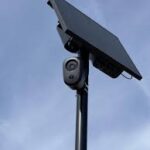
In June of 2025, Oakland Privacy received a Flock audit log from the Riverside County Sheriff’s Office detailing the activity in their cloud database of license plate reader scans from the department’s owned cameras. After keyword searches of the hundreds of thousands of entries, a handful of hits for out of state shares and references to searches “for” Customs and Border Patrol got (rightfully) most of the attention and formed the basis for this Cal Matters story by Khari Johnson.
But in looking in a more leisurely fashion at the rest of the data – and we are not picking on the Riverside County Sheriff in particular, these logs are very similar throughout the state – we wanted to pose some questions about the plain old regular legally compliant use of this technology. In short, we don’t completely understand what they are looking for.
To give an example, let’s look at the usage of the Riverside County scans of the small Bay Area suburb of San Bruno in San Mateo County. The San Bruno Police Department has a sworn staff of about 50 officers that serve a city with about 42,000 people, according to the City of San Bruno website. San Bruno is located 436 miles from Riverside County. The FBI crime reporting database shows 1,807 reported crimes in San Bruno in calendar year 2024 or a crime index of about 43 crimes per thousand residents. Of that amount, 1,460 cries are classified as property crimes or larceny theft or 80.7%.
Yet when we examine how many times the San Bruno Police Department queried the Riverside County Sheriff’s license plate reader database in the sole month of May 2025, the number of queries is 1,791, almost as many times as San Bruno reported crimes in the entire previous year. Extrapolated out to 12 months, that suggests 21,492 queries a year or 11.8 times the annual crime rate in a jurisdiction over 400 miles away. Why are all of these plates being run?
We are sure that one time, possibly twice, someone may have robbed a gas station in San Bruno and escaped to Riverside, somehow evading every license plate reader in San Mateo County on their way. But not thousands of times a month. If these are broad statewide queries, then why are there so many more of them than the number of reported crimes? Does every single crime provoke 10+ different license plate queries? We don’t know the answers, but the data seems to suggest a lot of untargeted surveillance untethered from specific crimefighting.
The pattern holds in larger cities as well. For example, the City of San Jose. The City of San Jose has a sworn staff of about 1172 officers who serve a population of about 997,000 residents. San Jose is located 395 miles from Riverside County. The FBI crime reporting database shows 61,283 reported crimes in San Jose in calendar year 2024 or a crime index of about 61 crimes per thousand residents. Of that amount, 39, 337 are classified as property crimes or larceny theft or 64.1%.
When we examine how many times the San Jose Police Department queried the Riverside Sheriff’s license plate reader database in the sole month of May 2025, the number of queries is 36,246 or more than half of the reported crimes in the previous 12 months. Extrapolated out to 12 months, that suggests 434,952 queries a year or 7 times the annual crime rate in a jurisidiction almost 400 miles away.
Audit logs released as public records do not tell us what plate numbers are being searched and while there is a purpose field, in many cases (prior to Flock’s new purpose recording requirements) it is simply a vague word like “investigation”. Some of these may well be repeated searches on the same plates on different days. But the high quantities are concerning, and at least for us, raise questions about all this querying and its nexus to solving crimes. As concerned citizens have pointed out, the ubiquity of these devices means most drivers have their location recorded and time stamped multiple times per day. And suspicious plates are already placed on hot lists and ping police whenever that plate passes a reader.
Californians deserve to understand why their tracked movements are queried so often, and many times by officers hundreds of miles from where they live in databases in the other half of the state.