Originally printed at: https://media-alliance.org/stopping-stops-urban-shield-vendor-vetoed-due-to-racist-stereotyping/
On August 1,the Alameda County Board of Supervisors, which has been under fire for several years over the police militarization expo Urban Shield, took its first action to enforce 12 reform principles the Board embraced in January of 2017, four months after two dozen people were arrested at the 2016 expo.

After being notified only hours before the meeting by MA executive director Tracy Rosenberg and American Friends Service Committee Wage Peace Coordinator John Lindsay-Poland of extreme racial stereotyping on the website of Urban Shield vendor Strategic Operations of San Diego, the board of supervisors refused to authorize the use of the vendor. Alameda County Sheriff Gregory Ahern’s request to contract with Strategic Operations for $45,000 in “hyper-realistic training” for the 2017 Urban Shield event failed for lack of a motion, with none of the five supervisors willing to support the request. Supervisor Keith Carson removed the item from the board’s consent calender. Supervisor Richard Valle indicated he would not vote for it and Board President Wilma Chan also spoke in opposition.
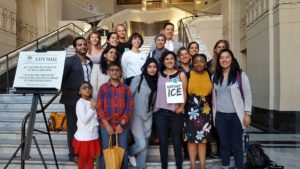
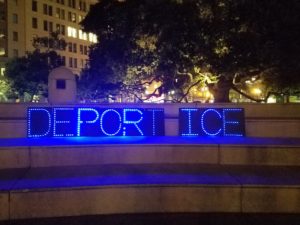
 On July 18, the Oakland City Council voted unanimously to terminate the Oakland Police Department’s federal agreement with Homeland Security Investigations (HSI), formerly known as ICE. The resolution by Council Member Rebecca Kaplan followed a unanimous recommendation from the City’s Privacy Commission which had investigated the status of all of the City’s agreements with federal law enforcement agencies.